
Werewolf Women of the 1980s-1990s
Welcome to Part 3 of the Women Werewolves at the Movies sub-series. Catch up on the previous parts below.
READ Part 1 here – 1910s-1940s
READ Part 2 here – 1950s-1970s
READ Part 3 here – 1980s-1990s
READ Part 4 here – 2000s
READ Part 5 here – 2010s-2026
This is the decade where we get The Howling and its sequels, so women as werewolves really start to take off. We’ve certainly thoroughly shed the pretence that women can’t be violent wolves by this decade, which is nice to see, and there’s a definite step up in the number of wild women on screen.
Let’s take a look at the stats when we add in these 2 decades.
| All Werewolf Films 1980-1999 | Woman is a Werewolf/Believes she’s a a werewolf? | Directed/co-directed by Women | Written/co-written by Women |
| 96* | 13 | 2 | 9 |
*In the 1980s and 1990s, there were loads of films where werewolves appeared briefly or were characters in fantasy films, but the film itself was not a “werewolf film”. They’ve been included in this figure to show how deeply embedded the werewolf is now, while previously we didn’t see this casual “oh, and we’ll add a werewolf, of course!” as much. You didn’t see this at all in the first 50-60 years of werewolf movies, and only began to see it (rarely) from the 1970s onwards, I think. This isn’t necessarily the actual number, either, it’s what I could find!
Also a disclaimer: I’m not aware of any trans women writers/directors credited under a male name on the lists I’ve looked at. If this applies to any writers/directors, please let me know so I can add them to the list.
Conversely, I’m not aware of any directors/writers credited under a female name who have transitioned; if so, I can remove them.
Also, as this post is very binary, I’m not aware of writers/directors who identify as non-binary, so if that’s the case, I can remove them from this list.
Running Totals:
Total number of werewolf films* 1910-1999: 198
Total werewolf films directed by a woman: 03
Total werewolf films written/co-written by women: 11
Total with a woman werewolf: 29
*that I’ve found… not necessarily comprehensive!
Films written/directed by women so far, which includes films with a background werewolf character, and films where the original story was written by a woman, even if it was adapted for the screen by a man:
- The Werewolf (1913) dir. Henry MacRae, adapted for screen by Ruth Ann Baldwin from the short story The Werewolves (1898) by Henry Beaugrand.
- The Undying Monster (1942) dir. John Brahm, co-written by Lillie Hayward and Michael Jacoby
- Libahunt/Werewolf (1969) dir. Leida Laius, co-written by Leida Laius and Lembit Remmelgas, based on the 1912 play of the same name by August Kitzberg.
- The Monster Club (1981) dir. Roy Ward Baker, co-written by Valerie Abraham and Edward Abraham, adapted from the stories of R. Chetwynd-Hayes. This is an anthology film with a werewolf featured.
- The Company of Wolves (1984) dir. Neil Jordan, adapted by Neil Jordan from the stories of Angela Carter (credited as a writer) and Charles Perrault. I’m including this as it’s an adaptation of a woman’s original werewolf fiction.
- The Dungeonmaster (1984) dirs. Rosemarie Turko, Peter Manoogian, David Allen, Steven Ford, Charles Band, John Carl Buechler, Ted Nicolaou, co-written by Rosemarie Turko, Jeffrey Byron, Peter Manoogian, Allen J. Actor, Charles Band, David Allen, John Carl Buechler, and Ted Nicolaou. This features a werewolf, but, like The Monster Club, is not a “werewolf film”. Nevertheless, Rosemarie Turko co-directed and co-wrote on this film, so it’s included.
- Leviatán/Monster Dog (1986) dir. Claudio Fragasso, co-written by Rossella Drudi and Claudio Fragasso.
- Red Riding Hood (1987) dir. Adam Brooks, written by Carole Lucia Satrina.
- The Nightmare Before Christmas (1993) dir. Henry Selick, co-written by Caroline Thompson and Michael McDowell, based on the original story by Tim Burton. A background character is a werewolf.
- Wilderness (1996) dir. Ben Bolt, co-written by Bernadette Davis, Andrew Davies, and Denis Danvers.
- Shopping for Fangs (1997) dirs. Justin Lin, Quentin Lee, co-written by Daniela Alvarado and both directors.
- The Curse (1999) directed and written by Jacqueline Garry. This is the first werewolf film I’ve found which was written solely by the female director.
It’s worth noting that women are still producing and casting loads of these male-directed and written films, so they are definitely having an impact on werewolf cinema, but they aren’t helming the films so much! It’s also worth noting that for some of these films, the information is incomplete.

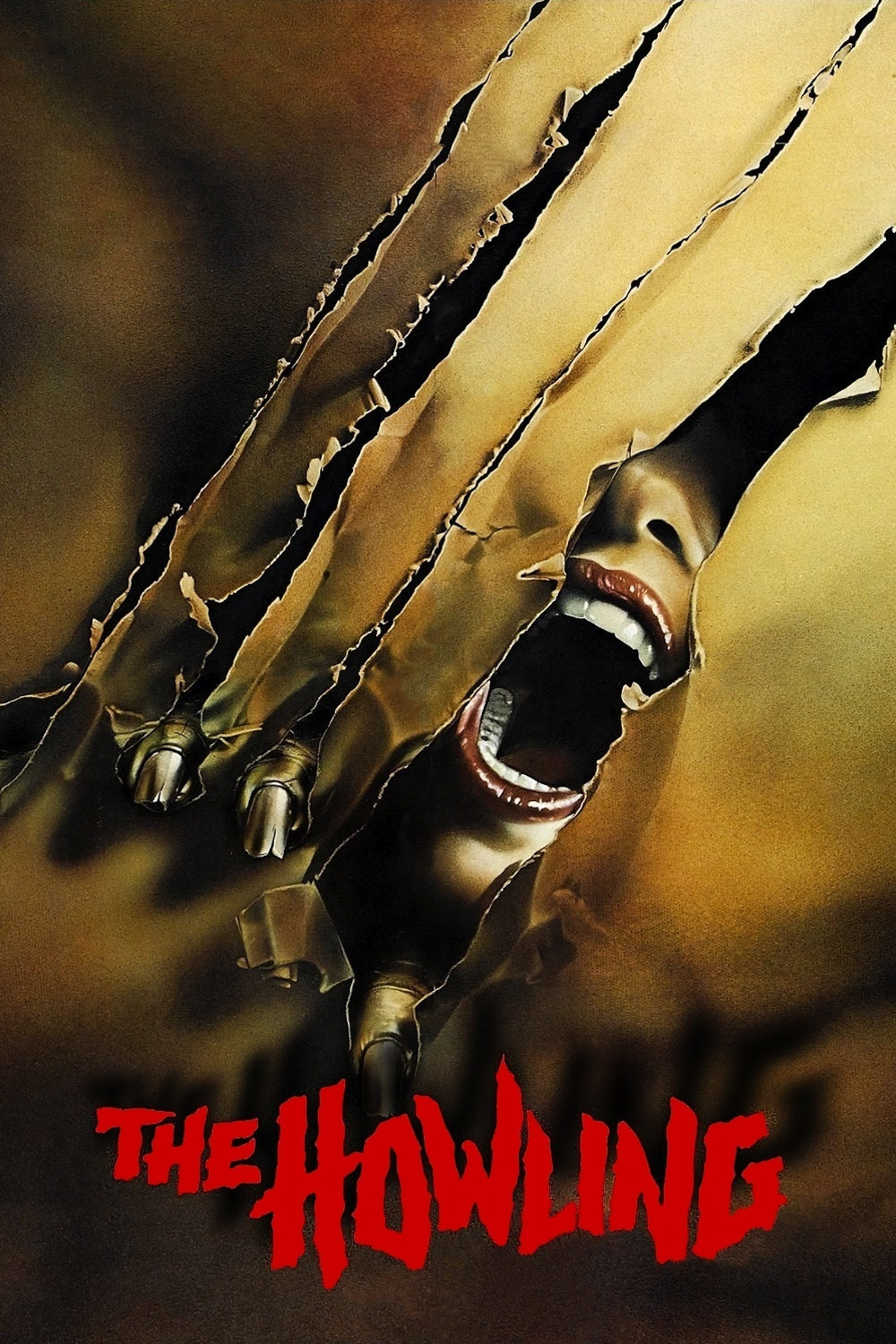
From what I can tell (and again, I may have missed some), we have to wait from 1976 until The Howling (1981) for our next woman werewolf. After a bizarre and near fatal encounter with a serial killer, a newswoman is sent to a rehabilitation centre whose inhabitants may not be what they seem. We get some werewolf sex in the woods, and more than one woman werewolf! It’s all about that power-dressing, ladies. Get that pedigree bichon frise look going on.
Poland was up next with Wilczyca/She-Wolf (1983). In 1848 Poland, Kacper Wosinski is cursed by his wife Maryna on her deathbed. Her evil spirit then haunts him in the form of a she-wolf. So here, the she-wolf is a spirit, not a physical form, but I think it counts.
Angela Carter got the big screen treatment in 1984, which gave us The Company of Wolves and a mix of he-wolves and she-wolves in this anthology. I really enjoyed this film, and its take on Red Riding Hood from multiple angles.
In 1985, we got The Howling II: Stirba – Werewolf Bitch, starring Christopher Lee. When a young journalist dies in violent circumstances, her brother soon learns, by way of the mysterious Stefan Crosscoe, that his sister has succumbed to the werewolf curse.
Howling III: The Marsupials (1987) gives them the Down Under treatment, but also features a romance. A strange race of human-like marsupials appear suddenly in Australia, and a sociologist who studies these creatures falls in love with a female one. Is this a dangerous combination? (Yes). Do these count as werewolves? Debatable. Perhaps no. But here they are.
Howling IV: The Original Nightmare (1988) is basically the first one again, or rather, back to the roots of the original novel, but not a favourite entry in the franchise.
Possibly inspired by so many women werewolves with shoulder pads, 1989 took it a step further – as a middle age metaphor. My Mom’s A Werewolf (1989) is a horror-comedy where the werewolf transformation is a slow, body-horror-focused process. I haven’t seen it, but I’m wary of the messaging of “middle aged women have hair, ew”.

Frustrated housewife Leslie visits an animal shop to purchase a flea-collar. Ignorant of the fact the owner is a werewolf, she accepts his invitation to lunch and later in his apartment. Through a bite in her toe he starts her slow transformation in a werewolf. Home again, she desperately tries to hide the often disgusting process from her family, but her daughter Jennifer and her friend recognise what’s going on, and kill Leslie.
I can’t help but wonder what a remake written and directed by a middle aged woman would look like… The ‘killed by your own daughter’ trope has parallels with The Substance, and the fear of older women being supplanted by younger women and losing their social currency goes all the way back to folktales like Snow White.
I think it’s also the case that female ‘competition’ is considered through a male lens here, so while we’re getting go-getter female werewolves, they’re also not really succeeding. They don’t get to explore their new lives and newfound powers without a violent end. The exception is Angela Carter’s werewolf girls, but that’s because she’s doing something rooted in actual feminist thinking with them.
Women Werewolves of the 1990s
While there is no (?) she-wolf in The Howling IV: The Freaks, we do continue with the trend of older women in this role with the horror-comedy Mom (1990). In this film, an elderly lady rents a room to a serial killer who is secretly a werewolf, and is bitten for her trouble. She ends up a werewolf herself, leaving her son to try and stop the duo from doing more harm.
Moving away from the sexy and the comic, which are the two predominant things a woman can be as a werewolf, it seems, we find Wilderness (1996) building on the nuances of loneliness and isolation that the werewolf condition creates. Male werewolves get to be lonely, tortured, sympathetic creatures as early as 1922. This film allows its female protagonist the same complications. Our main character has been transforming since she was thirteen (another puberty metaphor), and now she is interested in a relationship with a man she has met, she is talking to her therapist about her situation. Is there nudity? Yes, loads. But it’s also cerebral and psychological. There was a woman on the writing team for this one, which may have made a difference: Bernadette Davis.
In 1997, we get the werewolf Serafine in An American Werewolf in Paris. Serafine is also a sympathetic werewolf, and a love interest for the hapless protagonist. She is not just a victim of the curse, but also of unethical scientific experimentation.

In that same year, Shopping for Fangs (1997) gave us lesbian werewolves in an indie, low budget, Action-Comedy-Thriller. Apparently made on a budget of $35K by film students, it crosses genres and explores duality in some interesting ways, especially where Asian-American identity intersects with queerness.
Moving into the softcore era, The Strangers (1998) gave us a taste of married werewolf life, as a man is infected by his wife (by biting her playfully?) and escapes to the mountains after a bloody duel, only to have her catch up with him. Many have commented this feels like it should have been a vampire film, with the werewolves playing by vampire rules (stakes through the heart as a means of dispatch, etc). It’s also more m/f softcore porn dressed up as a horror film.
We finally get a woman werewolf both directed and written by a woman was 1999, with The Curse, written and directed by Jacqueline Garry. Here, werewolfism is explicitly linked to the menstrual cycle and hormonal fluctuations within it. Shy, single Frida is bitten by a dog at a lingerie sale and gains massive amounts of confidence (increasing her desirability). When she wakes up with her sheets soaked in blood, she assumes her attitude changes were PMS-related, but that’s not the case. When the men she starts dating all die horrible deaths, she has to face the idea that she might in fact be cursed.
That’s a wrap on the ’80s and ’90s! I think it’s interesting that we’re starting to see some trends emerging. There’s definitely a difference between women werewolves written by men, and women werewolves written by women – it’s not the same type of werewolf story, and, up until The Curse (1999), the link with the menstrual cycle hasn’t been so overt. The Company of Wolves (1984) certainly is a coming-of-age anthology of wolf tales, but that is also about sexual awakening and self-realisation, rather than bloodied sheets and PMS metaphors.
I also like that we’re seeing older women as werewolves, and some perimenopause body horror is included. I think that could be really interesting if done well.
It’s also interesting how many werewolves are lesbians, but how few male werewolves are gay. I think there’s a fairly obvious explanation for this, along the lines of male werewolves embodying toxic cishet masculinity, and lesbians already being stereotyped as predatory and ‘manly’ in contemporary media.
I also didn’t realise (a) how pioneering the early women writers and directors were in Horror cinema, looking at the stats, and (b) how few of them there are in this particular subgenre. I wonder what the stats would be with vampire films…? Are they simply not around until the 1990s, or are they all busy doing other things? If they’re out doing other projects, what is it about werewolf films that didn’t appeal? I suspect a little from Column A, and a little from Column B…
Next post in the series: Women Werewolves of the 2000s & 2010s.
Leave a Reply