

Nikoline Kaiser (she/her) resides in Denmark, and writes short stories, novels and poetry. She has published several pieces in both English and Danish, and been longlisted for the Lee Smith Novel Prize. She writes about grief, love, horror, sexuality and one time about a woman turning into a tree.
AUTHOR LINKS:
Website: nikolinekaiser.dk
Social Media: @nikolinekaiser on Instagram, bluesky and reddit
Read a free sample:
The Dreaming of Man (Amazon Look Inside feature)
Book Club/Reader pitch for The Dreaming of Man:
A queer spin on Lovecraft meets Shakespeare’s Macbeth in a historical crime-turned-horror novella.

Cover art by J.J. Epping.
Your novella, The Dreaming of Man, was released in 2025. What was the writing journey like from first idea to query-ready?
I wrote the novella all the way back in 2019, and I actually wrote the first draft – which hasn’t changed a whole lot, aside from being cleaned up – all in one afternoon. I don’t think I took any breaks. It was one of those stories that had to come out all at once, or I feared I wouldn’t finish it.
It received a lot of rejections over the next couple of years, until it landed with dave at Neon Hemlock Press.
It sounds tacky, but I truly believe it found it’s right home with Neon, and the experience I had with the press has been wonderful. I had huge input in the final version, including getting to pick the artist to make the cover — J.J. Epping, a dear friend and someone I knew could nail the creepy feeling I wanted the cover to convey.
What are the pros and cons of being a Danish author writing in English, and what advice would you give others writing for an Anglophonic market?
The biggest con is definitely my own insecurities about playing with the language; I feel I can’t get away with as much, because publishers and readers might perceive it as a mistake instead of a deliberate bending of the language rules.
And then there’s the time differences for events, and not being as physically close to the market, particularly for events.
For anyone else in the same position, I would recommend familiarizing yourself as much as possible with both the Anglophonic and your local publishing world. Some works might fit better in one cultural context than the other.
What are your main Weird Fiction and Gothic Horror influences, and what are your favourite themes and elements from these genres? Which can readers expect to find in your novella (if you can let us know in a non-spoilery way)?
I am actually fairly new to these genres; I used to avoid horror at all costs, until I fell over some video essays on how much queer exploration there often is in horror. And then we started reading gothic fiction at university, and I fell in love with the genre.
Ann Radcliffe’s works – especially “The Italian” – are amazing and show so much of what still works in horror today. And for anyone writing in these genres, I recommend reading “The Castle of Otranto” by Horace Walpole, the first every Gothic horror. It reads as fairly silly now, but it is basically one long checklist of what to include in a classic Gothic story.
“The Dreaming of Man” contains a bit of body horror, which has always fascinated me. People’s relationship with their bodies, the things we think of as “horror” about bodies across history and cultures, can vary so much.
And then I’m just a big fan of the eerie, which is something Radcliffe nails, and which always unsettles me more than some big, scary monster. Not that a big, scary monster isn’t fun, too. I’m a big Godzilla fan.
How did the title come to be, and were there any alternatives you considered?
The title was inspired by a passage in Macbeth, which is also included as a prelude to the beginning of my book. The last part reads: “… Nature seems dead, and wicked dreams abuse / The curtained sleep.”
There’s a lot of layers to this quote, starting from the top: nature is dead, and sleep often seems like death to the casual observer. And then of course we dream in our sleep, and that’s both an obscuring and a revelation of the real world. And then “curtained sleep” which can be taken quite literally as a bed curtained off, creating another barrier against the real world, even on top of the barrier of sleep.
Basically, the characters have done everything they can to cut themselves off from the horribleness of the real world, but it still comes back to haunt them in their dreams.
I think that’s ultimately what horror is: not just “what if your nightmares were real?” but also “and what if you couldn’t shield yourself from them?” Not physically or mentally. And then there’s also a double-layered meaning in the title, but I’ll let the text reveal that on its own.
The working title was “Lovecraft goes Queer, Shakespeare goes Queerer”. I’m not sure that would have gone down for publishing.
The town of Osmund has been compared with Innsmouth (The Shadow Over Innsmouth, H.P. Lovecraft) and Dunsinane (Macbeth, Shakespeare) – were these conscious influences, and were there any others that inspired the setting?
Definitely very deliberate influences, especially Innsmouth. The style and feel of the town is one that permeates modern Weird Fiction and Gothic Horror, so even without reading Lovecraft, I think it can latch onto you. But there were a lot of inspirations from real life as well.
I’ve always lived in port cities, and I grew up sailing with my family, so sometimes you would arrive at some really small places, with old boats and older buildings. Thankfully never as scary as those places in fiction, but then again, we mostly went there during the summer. Things look very different in the dark, or during Fall and Winter when everything’s gray and only a few plants are still blooming.
What queer representation can readers expect in this novella, and also in your other available work?
There will almost always be at least one stray lesbian somewhere — though not always! And I try to be broad in my understanding and love for the whole queer community. I figure out myself a lot through the stories I write, even when the characters and settings have very little to do with my personal life. Fiction is both exploration and understanding, and like a dream, I think it can reflect both the reality we live in and the reality we hope to see one day. So, the answer is: mostly lesbians! Or bi women! I love women of all kinds, so I’m biased. There’s technically no lesbians confirmed in “The Dreaming of Man”, but just because I didn’t write it in the text doesn’t mean the women aren’t kissing behind-the-scenes!
Do you have anything else to plug here that is currently out or coming soon? What should readers look out for?
I have two short stories coming out, one called “Puppet Show” with Estrella Publishing, in their publication “Celestial Glossary”. It’s an introspective piece about re-defining yourself after an accident and following your stranger impulses despite what the world around you is telling you to do. It’s out January 30th.
And then later this year – date still unconfirmed – I am part of a sci-fi anthology, with a short story about people living in huge, moving, mechanical animals after the end of the world. I try to post more on my socials as we get closer to publication, so keep an eye out.
Like This? Try These:

Author Spotlight: Dark Epic Fantasy Author, Skye Crawford
Meet Skye Crawford (they/them), author of the dark epic fantasy novel TWISTED SOULS, Book 1 of The Shattered Mirror Saga. Get this queer fantasy from Dead Fox Publishing.
Keep readingAuthor Spotlight: Queer Romantasy author C. Quince
C. Quince (he/they) is a MENA/SWANA British author who lives in England, enjoys Sci-Fi and Fantasy, History, and Halloween. He’s the author of m/m romantasy, CONSORTING WITH THE KING, out now with JMS Books! Read on for more…
Keep readingAuthor Spotlight: Queer West Asian Fantasy author Fetin Sardaneh
Meet Fetin Sardaneh, the Palestinian and Kurdish author of queer West Asian fantasy, and find out more about their debut sapphic novel, THE JINN’S BARGAIN.
Keep readingAuthor Spotlight: Queer Gothic author Alice G. Brooks
Discover queer Gothic romantic tragedy, THE INK EATER, by Alice G. Brooks. It has a sentient house and ace rep!
Keep readingAuthor Spotlight: Black Sapphic Vampire Romance author Liza Wemakor
Meet Liza Wemakor (she/they), author of paranormal vampire romance, LOVING SAFOA, out now with Neon Hemlock. This multi-POV novella spans continents and eras, and Cynthia & Safoa’s romance stands the test of time.
Keep readingAuthor Spotlight: Paranormal Ecohorror author S.M. Mack
Meet S.M. Mack (she/her), author of DEATH VALLEY BLOOMS. Find out more about this queer ecohorror novella and how it came about!
Keep reading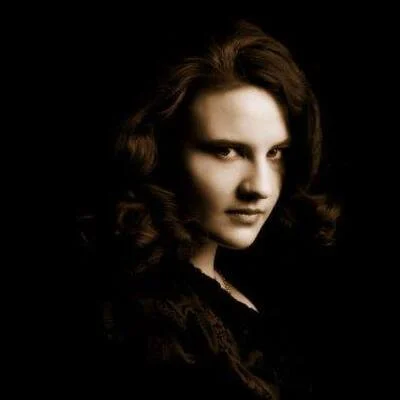

Leave a Reply