
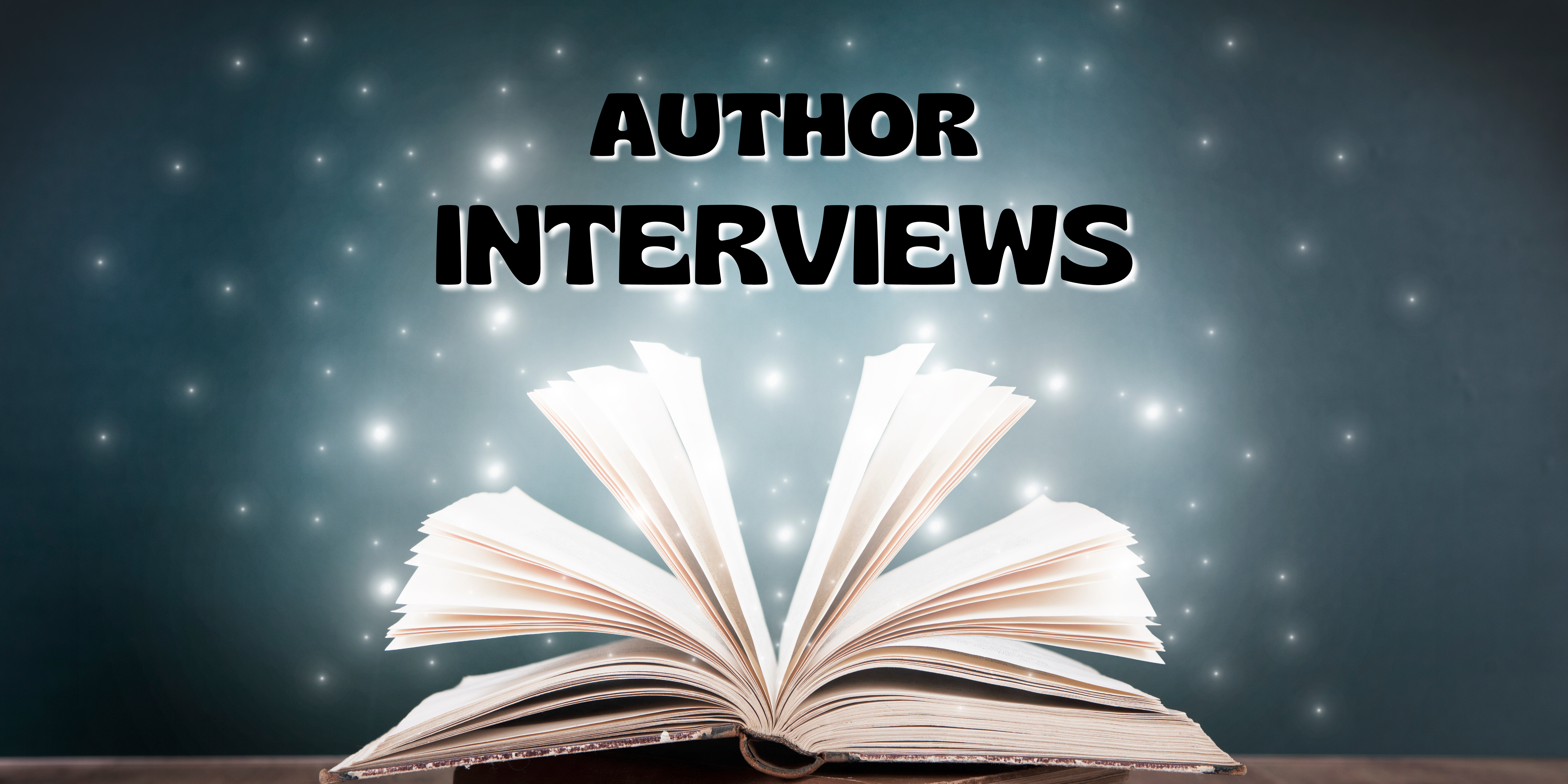

Liza Wemakor (she/they) is a writer and a Ph.D. candidate in UC Riverside’s English Department. Her fiction has been published in Strange Horizons, Anathema Magazine, Baffling Magazine, and elsewhere. Her debut novella, Loving Safoa, was published by Neon Hemlock Press in February 2024.
AUTHOR LINKS:
Website: www.lizawemakor.com
Instagram: @lizawemakor
Bluesky: @lizawemakor.bsky.social
Book Link: Loving Safoa (Neon Hemlock)
Book Elevator Pitch for readers/book clubs
If you enjoy paranormal romance with literary stylings, you will enjoy Loving Safoa!

Your novella, Loving Safoa, is out now with Neon Hemlock. What were your main inspirations behind this sapphic vampire novella?
I wanted to write a vampire story that reflected underrepresented elements of my worldview. It seemed sensible to lean into Safoa’s experience of being an undocumented immigrant in the Western world across a long expanse of time, and to demonstrate how this extended period of uncertainty and precarity forces Safoa into survival mode. Meanwhile, she is also recovering from the trauma of being held captive by a sadistic colonizer for a number of years, as well as experiencing new kinds of freedom in New York, and eventually Maryland.
Cynthia, on the other hand, feels orphaned — she is navigating adulthood without her mother or any other parent, yet becoming a maternal figure to her students. She also feels a level of insecurity about her connection to her motherland, as a Ghanaian-American woman, and faces this head-on in her relationship with Safoa, who she imagines as a pure embodiment of African identity. Safoa and Cynthia’s lives are quite complex, and together they tell a story of diasporic reunification.
The novella features woven stories from different places and time periods, from 18th-19thC Ghana to a near-future Maryland. How did you decide what segments of these characters’ lives to include, and were there scenes and times that you played with but ultimately decided to cut?
I wanted to maintain a focus on Cynthia and Safoa’s romance, so I omitted some portions of their lives before they met; I may have explored more of those past moments in a longer project, like a novel, but a novella length felt right for this story. I wanted the passage of time to be a bit surreal, because it is surreal to have lives as long as Cynthia and Safoa’s. Time itself and the details of their lives are a blur.
I was seriously toying with showing glimpses of Safoa’s life in London — her lovers, and her brief skirmishes with other European predators. I would’ve emphasized how she was simultaneously powerful and vulnerable to exploitative people, which motivated her departure to the U.S. after a few decades. I didn’t include these scenes because Cynthia may have been lost in the larger narrative — there wouldn’t have been as much of a balanced representation of their lives, and Safoa would have taken over the story.
How does vampirism and the donor concept work in your novella, and is this based on any folklore?
I was very inspired by Jewelle Gomez’s approach to vampire networks in The Gilda Stories — vampire communities that are explicitly political, and whose politics have been informed by their previous experiences of being hurt, exploited, and truly loved.
I was also inspired by Octavia Butler’s approaches to both community and feeding in Fledgling. Shori depends upon a host of human companions and vampires while navigating a white supremacist vampire hierarchy. Shori’s companions also gain a lot from her presence, in a symbiotic fashion.
Tamara Jerée wrote beautifully about these dynamics in her Strange Horizons essay, “How to Make a Family: Queer Blood Bonds in Black Feminist Vampire Novels“.
There was a hint of Ghanaian folklore in the novella, though I took creative liberties. Safoa and a character named Yaba occasionally refer to the first vampire they met as ‘ɔbonsam’ — or a demonic entity. In some Ghanaian folklore, there are vampiric, humanoid creatures called ɔbonsam or sasabonsam that have very long hair, like Safoa does at some point, and live / feed on people in the forest. I didn’t opt to include other details like sharp teeth and bat-like features in my depiction of vampires. Tongue feeding was more fun for a smutty sapphic story.
At some point in my life I encountered myths related to the obayifo (another West African vampire) as well, and I took liberties with the factoid that they are phosphorescent, i.e. when Cynthia noticed a blue aura around Safoa’s body.
Can you tell us more about Cynthia – where did she come from, and what made you set her as a schoolteacher in the early 1990s at the start of this novella? How did you develop her character, her voice, and her desires (e.g. to be an “everlasting elder”)?
I am one of those people who insists on a vaguely-defined, somewhat secretive spirituality that undergirds my writing practices. In the spring of 2021, Cynthia and Safoa appeared to me almost effortlessly, and I was compelled to write about them. Not long before that, I’d gotten into the Ph.D. program I am at the end of now, and I started writing feverishly before my time and energy became more limited. Cynthia and Safoa were fascinating to me, and their chemistry was palpable; at times I blushed when writing and editing their sex scenes, because it felt like an intrusion upon their privacy.
Cynthia’s life resembles my life in some ways, but not all. I haven’t lost my mother, and she (Cynthia) has spent more of her life in New York City and Maryland than I have, but her anxieties about her authenticity as a Ghanaian diasporan and her interest in teaching certainly resonate with me. I am sure that some of my own subjectivity informed how I wrote Cynthia, though a lot of it was subconscious.
I had a moodboard for both Cynthia and Safoa, and Cynthia’s moodboard included images of the actresses Nicole Beharie and Moses Ingram, and the model Dede Mansro. I was interested in channeling not only the softness of their appearances, but the moodiness and subdued seductiveness they are able to convey.
Regarding the choice to begin in the 1990s: it was a perfect fit both aesthetically and politically. The 90s was a period of intense political maturation for educators, artists, and the general public. There was, especially for queer black people, queer people of color, a mingling of death and renewal — an increasing awareness of identity (and its constructedness) mingling with the optimism of entering a new millenium. The perfect setting for politically conscious vampires to come into themselves.
Can you tell us more about Safoa, the vampire, her Ghanaian roots, her relationship with tattoos and her place in her communities across time as a body artist, and how she came to be shaped on the page? What was the character development process like for her, and was there research involved to craft her journey from 1799 onwards – if so, what research did you do?
A pattern that is emerging in my answers to these questions is that I placed Cynthia and Safoa in historical moments that were hotbeds for social resistance. I wanted Safoa to live through multiple eras of Black and African resistance, and I wanted readers to see her putting in the work to pursue what she saw as her purpose in life, which was being a body artist from the beginning, and then evolved, through meeting Cynthia, to include more social pursuits.
In writing Safoa, I revisited a few books from a class I took in college about pre-colonial African history, and I read a few books and articles about West African empires and West African mythology. I also made an effort to research some of the geography (landscapes and flora) of West Africa, and brushed up my knowledge of some Twi terms and phrases, which I grew up hearing from my maternal family. Ultimately, only some of these details made it onto the page, because making the world feel lived in required me to look at these landscapes through Safoa’s eyes.
What research did you do for the different settings in the novella, and what sociopolitical/ideological projections were you going with for the development of your near-future Maryland setting to avoid it being a utopia/dystopia?
I wanted each of the major settings of the novella, 19th century West Africa, 1990s New York City, and 1990s / 21st century Maryland, to reflect major political movements of their time. Safoa’s time in the part of West Africa we now know as Ghana was inflected with rising anticolonial sentiments. New York City is and was sensational for the community organizing within its boroughs, though it was not without the risk of violence (see: the 2003 murder of Sakia Gunn in the nearby Newark, New Jersey). Like New York City, the DMV is and was a major locus of queer arts organizing (especially literary arts) and queer political organizing, which I aimed to reflect in Cynthia and Safoa’s commune involvements.
I wouldn’t say I was consciously avoiding the story being classified as a utopia or dystopia, and this defiance of categories came about because I had naturalistic inclinations in the writing of this novella. I wanted my writing to reflect how deeply traumatic and how stunningly gorgeous people can be. For the Maryland commune in particular, I wanted to hint at the fact that there were conflicts commune members had already worked through before Cynthia and Safoa arrived, and working through these conflicts laid the groundwork for Cynthia and Safoa to soar, as cooperative leaders in their new community.
Would you ever consider expanding upon the story of Cynthia and Safoa, perhaps in a connected story, and/or are you moving on to other projects (if so, what’s next?!)
I would love to write a short story or novelette focused on Safoa’s time in London / Europe, when the time seems right to do so. I’ve written several short stories that I’m proud of since Loving Safoa came out in 2024, and it’s just been a matter of finding the right magazine at the right time for the stories that haven’t been published yet. I also have a few short stories that are in partial states, that I am slowly finishing as my dissertation takes priority.
I also have a novel project that is half-drafted! The novel project follows a polarizing, and potentially revolutionary, celebrity musician.
Beyond my own fiction, I am a nonfiction editor and finance manager for Anathema Magazine, a venue dedicated to speculation fiction by and for queer people of color that is relaunching after a 3-year hiatus — yay!
Like This? Try These:

Author Spotlight: Vampire Fiction Author Lucius Valiant
Meet Lucius Valiant, a Danish-British author, and learn more about his series, The Thornhill Vampire Chronicles.

Author Spotlight: Vampire Fiction Author Talia Wall
Meet Talia Wall and her dystopian vampire series, ‘Until Equinox’ trilogy! Books 1&2 are out now, and Book 3 is coming soon.
Author Spotlight: Vampire Fiction Author Eule Grey
Meet Eule Grey (she/they), a Sculpture artist, disability activist, and disabled author of queer, sparkly books. We talk about disability and sapphic elements in their work.
Author Spotlight: Horror & Vampire Fiction Author C. Lenz
C. Lenz is a Canadian author and scientist who lives with her wife Zoey in Hamilton, Ontario. In this spotlight interview, she discusses her monster-vampire slasher, Thyrst Festival.
Author Spotlight: Vampire Fiction Author Frankie Sutton
Frankie Sutton writes paranormal and urban fantasy, and talks to us about her novel, Vampiric Crush.

Author Spotlight: Queer SFF and Vampire Fiction Author H.S. Kallinger
Meet one of the authors from the Authors for Palestine event, H.S. Kallinger (he/they). Kallinger discusses his work, vampires, and what’s next for their queer Sci-Fi series.



Leave a Reply