

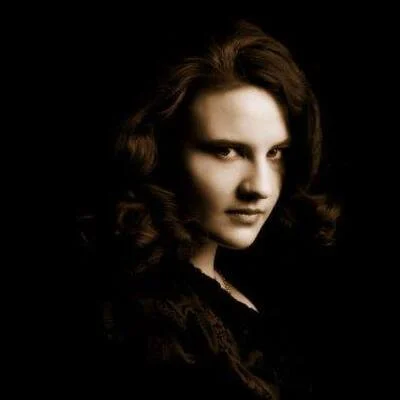
Alice G. Brooks (they/she), formerly published under Alice Brooks, is a sapphic indie author writing LGBTQIA+ fiction, heavily focused on deep-seated trauma and pain. When they’re not writing, they enjoy hiking, videogames, rewatching the same shows over and over again, and reading queer books.
AUTHOR LINKS:
Links to All Books: relinks.me/AliceBrooks
“The Ink Eater” Preorder: mybook.to/theinkeater
Website: alicegbrooks.com
IG, Threads, and Tiktok: @alicebrookswrites
Book Pitch for Readers/Book Clubs:
“The Ink Eater” is a gothic romantic tragedy in which the world of an immortal young man who eats stories to survive is turned upside down when one of his stories escapes and unearths the most painful parts of his past, ultimately leading to question whether everything he has ever lived for is worth the pain; or whether choosing himself had ever been an option.

Your book The Ink Eater is a queer Gothic romantic tragedy, featuring an immortal who creates and eats his stories, and a shapeshifting ink creation who escapes containment, perfect for fans of Sunyi Dean’s The Book Eaters and readers of Gothic fiction craving asexual representation. Tell us about your influences for this book, and where the ideas came from?
This book was partially inspired by “Don’t let the forest in” by C.G. Drews, partially by a beta read of an unpublished book by Wren Blackburne, and most importantly by my own need to share my own spin of the “sentient house” trope, while displaying a nice, slightly hidden critique of generative AI and adding a form of asexual representation that I don’t see nearly enough. Writing this story has squeezed my heart and unveiled parts of my soul that even I didn’t know existed.
What rep will readers find in The Ink Eater, and can you tell us more about why is that rep important to you?
Firstly, there’s a gay pairing between the two main characters. More importantly, the protagonist of this novel, Baird Cardall, is asexual. With asexual representation, it’s common to see it displayed as being unable to fall in love, hating touch, or being portrayed as childish or cold.
Baird is none of those things. He’s asexual and homoromantic, he falls in love, he adores physical touch (once he trusts), and he’s anything but cold. I think that media needs more of that sort of representation. It’s partially based on my own experience and displays a part of the ace-spec that many people don’t even know exists. I also rarely see the split attraction model being represented anywhere, so I wanted to include this as well, seeing as I’ve made my own experience with that.
Was it a conscious choice to write a romantic tragedy, or did the plot bend that way during the writing process?
A conscious choice. I’d gone in with the intention to write based on the story structure of Freytag’s Pyramid, which builds from exposition to the climax and the falling action; but it doesn’t end there. It ends with a catastrophe. I try to be very upfront about the fact that, yes, this book is tragic. It is not a romance, even though it contains one. It is not a happy story. I always knew exactly how Baird’s story was going to have to unravel, and I would argue that there’s a lot of potential for discussion and interpretation about the ending.
Tell us about your main characters, Baird and Hemming. How did you go about developing them, and where did the seeds of inspiration for these characters come from?
Baird existed first. I knew I wanted someone who eats stories and who survives off them, as long as they carry meaning and heart.
Hemming, originally, was intended to be a sort of paranormal investigator or something like that. I scrapped the idea when I came up with a story that escaped from the ink.
I’m a pantser, which means my stories are largely not outlined before writing them, so I discover a lot about my characters as I go. They developed on their own; I like to say that I merely write protocol for what they get up to.
Baird just naturally grew to be someone who loves nature, who talks to the animals and the plants, and who has a giant heart for everything around him but himself. He’s terrified of leaving the sentient manor he’s bound to, and hasn’t done so in the past 241 years. Why? You’ll have to read it to find out.
Hemming, on the other hand, is a bit of a snarky diva, but he cares deeply. He came to life through the story; he isn’t the story itself, but a being made of magic and ink who has been with Baird for a long time but didn’t develop a conscience until he took the name Baird created for a shapeshifter in his story and left the paper to be Baird’s friend. That’s his sole mission: make Baird happy. But that doesn’t mean he’s one-dimensional or lackluster, in fact, I think he’s one of my most complex characters. He’s the one who opens Baird’s eyes to the trauma he went through without truly realizing it, and without him, the whole story would’ve never happened.
What drew you to make the manor the main antagonist, and how did its role and character develop as you went through the drafting process?
I just really like sentient houses. At first, I didn’t have the manor in mind as an antagonist. It was just sort of a plot device, a secondary background character that made Baird’s existence more interesting and explained his curse. But then, as I was writing, its voice became clearer to me. And it does, in fact, have a voice. It talks to Baird; he refers to the voice as “his insides” throughout the stories, a voice that is “physical but also not”. It can control him to an extent, he’s the only one who can hear it, and he has a sort of codependent bond to the manor.
As I went through my latest editing rounds, the manor’s voice became darker and more manipulative, demanding in its wants and needs, and adding lore to Baird’s background. I’m very excited to see what people will think of Cardall Manor.
Was the sentient manor based on/inspired by any real/fictional buildings, and if so, what were they? If not, how did you go about designing it in your head as the setting for the book?
It wasn’t. The only room I had in mind was the story room, where Baird consumes his tales. I’d been picturing a gothic manor, but it can really be whatever you want it to be. The manor was built “so long ago” that nobody remembers when exactly it was created. But it changes and evolves with time, providing warmth in winter and coolness in summer. It has no plumbing but can draw a warm bath if one asks nicely enough.
The rooms of the manor were added as I was writing. The piano room and Lilith’s old bedroom were added later on, the foyer has been there since almost the start, and I had no precise image in head for the manor. Then, I had a friend draw it, and now that’s what it looks like in my head. There’s some art for it on my Instagram page, if anybody would like to see that.
What is your favourite piece of reader feedback or reviews for this series so far?
I’ve not yet had any reviews at this point, but my wonderful editor Sebbie [they/she/he] of Silver Press Edits has brought up so many interesting pieces of feedback and given me comparisons to different mythologies and tales that my story draws similarities to. It made me see the story in a whole new light.

Leave a Reply