
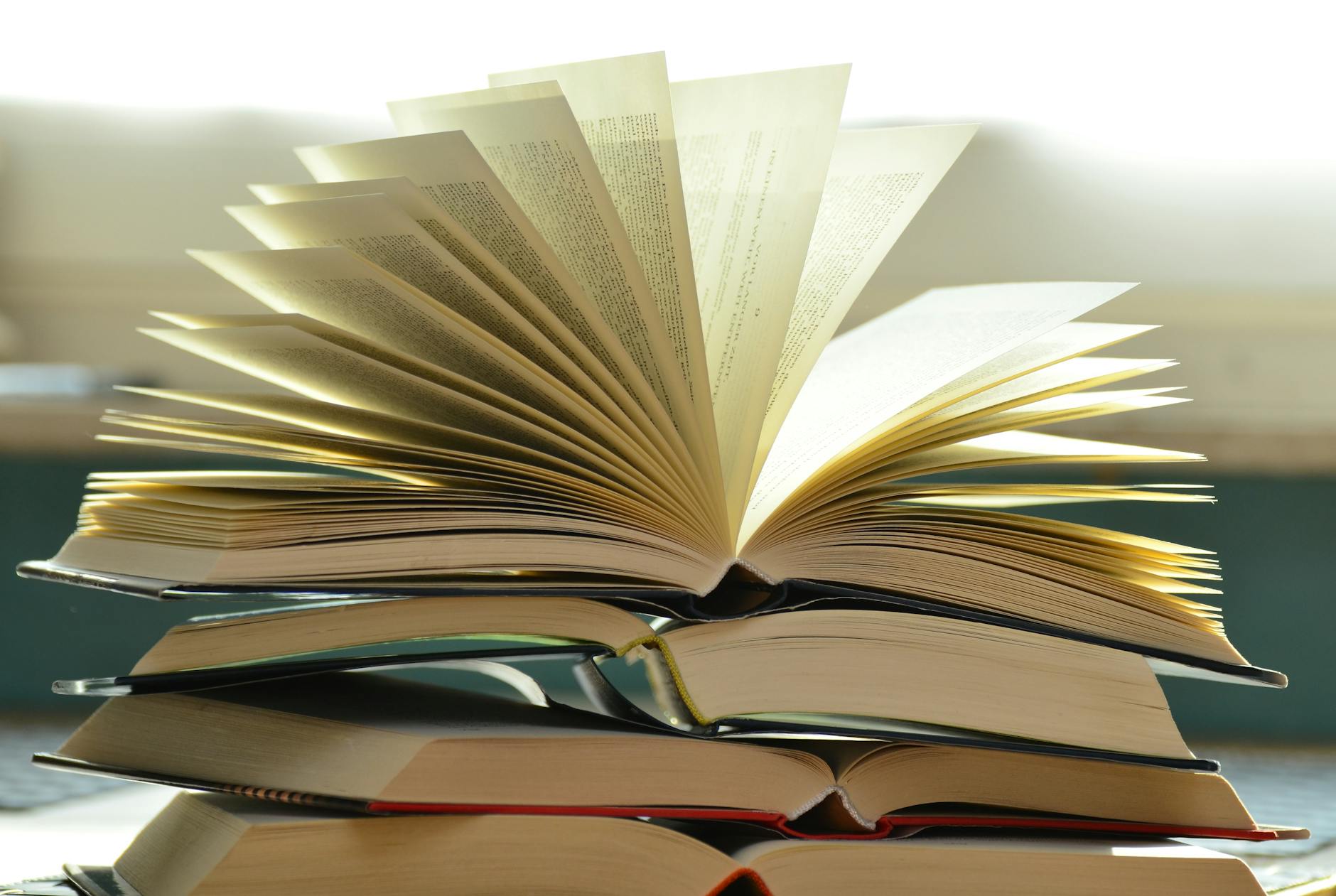
I’ve read some amazing books in my time, but a few will always stick with me. These are 5 books that I find myself thinking about at random times. These are books that are genuinely special to me, and I couldn’t choose a favourite, so they are in the order that I thought of them for this post.
Some of these have stuck with me since I was a teenager, and some are more recent books that I have not stopped thinking about since I read them, and probably never will.

Vagabonds! by Eloghosa Osunde.
This novel, which is a patchwork of marginalised experiences within Lagos, Nigeria, is something that I frequently find myself remembering out of nowhere.
Highly recommend.
In the bustling streets and cloistered homes of Lagos, a cast of vivid characters—some haunted, some defiant—navigate danger, demons, and love in a quest to lead true lives.
As in Nigeria, vagabonds are those whose existence is literally outlawed: the queer, the poor, the displaced, the footloose and rogue spirits. They are those who inhabit transient spaces, who make their paths and move invisibly, who embrace apparitions, old vengeances and alternative realities. Eloghosa Osunde’s brave, fiercely inventive novel traces a wild array of characters for whom life itself is a form of resistance: a driver for a debauched politician with the power to command life and death; a legendary fashion designer who gives birth to a grown daughter; a lesbian couple whose tender relationship sheds unexpected light on their experience with underground sex work; a wife and mother who attends a secret spiritual gathering that shifts her world. As their lives intertwine—in bustling markets and underground clubs, churches and hotel rooms—vagabonds are seized and challenged by spirits who command the city’s dark energy. Whether running from danger, meeting with secret lovers, finding their identities, or vanquishing their shadowselves, Osunde’s characters confront and support one another, before converging for the once-in-a-lifetime gathering that gives the book its unexpectedly joyous conclusion.
Blending unvarnished realism with myth and fantasy, Vagabonds! is a vital work of imagination that takes us deep inside the hearts, minds, and bodies of a people in duress—and in triumph.

Our Share of Night by Mariana Enriquez, translated by Megan McDowell.
There is so much in this book that I enjoyed, and so much that I think about randomly. It looks at class, queerness, Argentina’s Dirty War and its aftermath, and more.
“A magnificent accomplishment.”—Alan Moore, author of Watchmen
“A masterpiece of literary horror.”—Publishers Weekly
“One of Latin America’s most exciting authors.”—Silvia Moreno-GarciaA young father and son set out on a road trip, devastated by the death of the wife and mother they both loved. United in grief, the pair travel to her ancestral home, where they must confront the terrifying legacy she has bequeathed: a family called the Order that commits unspeakable acts in search of immortality.
For Gaspar, the son, this maniacal cult is his destiny. As the Order tries to pull him into their evil, he and his father take flight, attempting to outrun a powerful clan that will do anything to ensure its own survival. But how far will Gaspar’s father go to protect his child? And can anyone escape their fate?
Moving back and forth in time, from London in the swinging 1960s to the brutal years of Argentina’s military dictatorship and its turbulent aftermath, Our Share of Night is a novel like no other: a family story, a ghost story, a story of the occult and the supernatural, a book about the complexities of love and longing with queer subplots and themes. This is the masterwork of one of Latin America’s most original novelists, “a mesmerizing writer,” says Dave Eggers, “who demands to be read.”

The Island of Apples by Glyn Jones. Is this the story of a young Valley boy’s gay awakening, or an intense platonic relationship that becomes a fantastical obsession, or is Karl even real at all?
What is fantasy, and what is reality? A coming-of-age tale set in Merthyr Tydfil, this edition of the novel has stuck with me since A-Level, and was taught as an example of Welsh Magical Realism.
Glyn Jones is a renowned Welsh poet, his handling of words and imagery is dazzling. In this novel we have also a story with an exciting accelerating plot, with an eminently readable narrative.
The Island of Apples is a brilliant study of a pre-adolescent boy’s romantic imagination and dangerous enthralment, set vividly in the south Wales of Merthyr Tydfil and Carmarthen in the early twentieth century. Also a sophisticated philosophic artefact which explores the relationship between vision and reality in general terms and through the heightened experience of their conflict and confusion in a boy on the margin between adulthood and the ‘dying’ of parents and childhood.
In her introduction, Belinda Humfrey analyses and characterizes the novel; interprets some of its mysteries (beginning with the title), and places it within a twentieth century and larger literary context. She takes account of the novel’s critical history and Glyn Jones’s perception of it; and she makes use of his manuscript drafts and working notebooks.

We Are Here To Hurt Each Other by Paula D. Ashe.
Ashe’s prose is exquisite, and it’s the collection I find myself returning to for 1-2 stories, often different stories, most often.
It’s very easy to dip in and out of, but not so easy to forget.
Easily one of the best Weird Horror collections out there, for me.
“My god, this book. Where do I even begin? The exquisite language. The devastation. The slow, creeping dread. Truly masterful. I’m a new and devoted fan of Paula D. Ashe.” —Eric LaRocca
With these twelve stories Paula D. Ashe takes you into a dark and bloody world where nothing is sacred and no one is safe.
A landscape of urban decay and human degradation, this collection finds the psychic pressure points of us all, and giddily squeezes.
Try to run, try to hide, but there is no escape: we are here to hurt each other.

The David McDuff translation of Dostoyevski’s The Brothers Karamazov actually rewired my brain at age 18, and was instrumental in getting me through an incredibly difficult period of my life. It was an obsession of mine between the ages of 18-21, and I used it in the reshaping and reimagining of my personal faith during that period. I have not returned to it for many years, but I will always be indebted to this edition.
Fyodor Dostoyevsky’s powerful meditation on faith, meaning and morality, The Brothers Karamazov is translated with an introduction and notes by David McDuff in Penguin Classics.
When brutal landowner Fyodor Karamazov is murdered, the lives of his sons are changed irrevocably: Mitya, the sensualist, whose bitter rivalry with his father immediately places him under suspicion for parricide; Ivan, the intellectual, whose mental tortures drive him to breakdown; the spiritual Alyosha, who tries to heal the family’s rifts; and the shadowy figure of their bastard half-brother Smerdyakov. As the ensuing investigation and trial reveal the true identity of the murderer, Dostoyevsky’s dark masterpiece evokes a world where the lines between innocence and corruption, good and evil, blur and everyone’s faith in humanity is tested.
This powerful translation of The Brothers Karamazov features and introduction highlighting Dostoyevsky’s recurrent themes of guilt and salvation, with a new chronology and further reading.




Leave a Reply