
This month was the first time I entered Miss Snark’s First Victim Secret Agent Contest.
You submit your first 250 words, and snooping agents/other submitting authors/blog followers etc. leave you a critique. An agent reads through the submissions and makes their selections. They then read the whole MS of the ones they have chosen.
So… imagine my horror when I realised that the auto correct and code on the submission form had ruined my selection!

My 250 words should have looked like this:
However, the autocorrect thought that “beginning” should be spelt correctly, and that the underscores were a mistake. So it doesn’t really make a lot of sense.
The unexpectedness of the beginning grabs the attention brilliantly. I love the conflict which has developed in just a few paragraphs.
to
Yeah, I had to read this one a couple of times, and I’m not sure if I like it or hate it. It’s definitely a different approach. I’m just not sure from this first 250 what’s happening, and who is narrating.
and
I may be a little biased, since I’ve journeyed with good ole Nic to far away places, and seen many incredible sights through his writings, (which I truly feel should be on the big screen, I enjoyed so much) but to try to get an idea of the tale in 2 or 3 paragraphs is like trying to become a nuclear physicist by studying Betty Crocker…Long Live Nicodemus!
to
The first couple of paragraphs seem like a forward or prologue and I’m not sure that moves the story forward. Otherwise, interesting premise. I’d start it with “Nicodemus”.
The conclusion so far – this is a marmite story. You either love it, or you hate it. You may have to try it a few times to make sure.
Those who love it really seem to love it. Those who don’t just leave it alone in confusion, but, having had a look at my comments again, I’ve realised that the vast majority of my beta readers’ comments are in the “positive” category.

Attitudes to Story Construction
So, using my own work as a case study of story construction, it seems that what people want to read is, as ever, all about personal taste. One person (one of my more unsuccessful attempts at securing a beta reader) said they had to skip over the gory parts, and that the multiple story lines were confusing.
Another said they had no problem following it at all, and that they had no issues with the narration.
The fact is, people just have different tastes!
I once read a customer review of Eoin Colfer’s Artemis Fowl which said the plot dragged when focused on the fairies, and they would have preferred more on the title character. Beneath this was another customer review which said the fairies were the best part of the book, and the plot dragged when focused on Artemis Fowl.
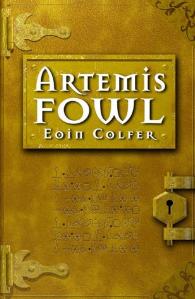
The most recent customer reviews of the book – the reprint – also vary widely. The majority of the reviews are 4 and 5 stars, but the vehemence of the few that dislike it is quite stark in comparison.
The fact is, no matter what you write, someone will hate what the next person loves. Ultimately, every reader has their own decision to make. And so they should! Long live diversity of opinion!

What Happens Now?
I’m going to start a mini-series of posts on Story Construction, as requested on my facebook page, so this simple observation is a good introduction to the topic. How a reader perceives the story we as authors (or aspiring authors!) have constructed is ultimately out of our hands – there is nothing we can do about that. We just need to stay faithful to the characters that live in our heads, and let the story be told. We have to craft it, mould it, shape it and etch in the finer details. We have to make each story as good as we can, not only because we’ll never get published if we can’t spin a decent yarn, but because the story and all its components demand that much from us. Otherwise, why write at all?
>> But what about the ideas we have in the first place?
>> Where do they come from?
>> What do you do with them when you have them?
How do you go about getting the idea into a story, and the story into the finished product?



Leave a Reply